/* Feeds ----------------------------------------------- */ #blogfeeds { } #postfeeds { padding:0 15px 0; }

Monday, May 18, 2009

Feminist or Anti-such?

I, along with my students and thousands of fans, have fallen in love with recent books by Tamora Pierce and Kristin Cashore. (Terrier, Bloodhound, Graceling, and Fire.) These fantasy books all feature incredibly attractive and strong teen females. They fight crimes, they battle monsters, they fall in love but seem to be totally in control of their relationships! They, not the male partners, are the ones who are empowered to choose and make their destinies.

So, when you have these young women, each (Beka, Katsa, and Fire) is taking one or multiple partners to bed, some details have to be attached. Beka got a charm, Katsa and Fire both used an herb -- these supposedly will prevent pregnancy -- the messy aftermath of their amorous acts.

On the one hand, I am happy that they are "getting it" and having a great time with it. On the other hand, my 21st century, teacher of teens and mother of a pre-teen daughter, mind keeps wondering: What are the BOYS/MEN doing to prevent the communication of the "other" kind of mess? The mess that hangs over millions of modern men, women, and children. Yes, these are Fantasy stories -- but since the idea of birth-control are included, what's to prevent our wonderful writers to also come up with some clever ways so that at least the young people in the stories (and the young people reading the stories) are careful about diseases. (In both Beka Cooper and Fire's cases, they are sleeping with men who have multitudes of partners before and after themselves.)

Just wondering... Why in these quite feminist slanted stories, men and boys are still not held "accountable" for their actions?

Labels:

Wednesday, January 28, 2009

The Graveyard Book, again

Just want to clarify my own post: Just because The Graveyard Book might have NOT had been widely read by children around the country/world, does not mean that it is not a wonderful Children's Book. It is. It will take mind, heart, and soul of each child reader to truly appreciate this book, though.

I'm thinking of the three kinds of fiction reading that we do as readers (and maybe especially young readers?). (I just made these up, so bear with me.) (And I realize that they can also be the three kinds of writings/books -- so not just dependent on the readers, but the authors as well.)

The first kind is the visceral reading: that we read quickly, just gobbling down the words very easily, like wolfing down a thick slice of chocolate cake. We pay little attention to the word choices, to the deliberate rhythm of each sentence, or other "literary details" but what's going to happen next to the one or two main characters we care about. Some books/stories are created to elicit purely such visceral reactions. And many many readers, young or old, take great pleasure in reading such books, without having to stop and contemplate.

The second is the cerebral reading: that we read closely, conscious of all the craftsmanship mastered by the author -- the voice, the tone, the vocabulary, the ways characters are constructed, the beat of each sentence, etc. etc., to the point that we analyze and marvel as we read without emotionally affected by the work. This kind of reading is often found when people feel the need or responsibility when they "KNEW" before they started reading a book that it is supposed to be a very well written piece of literature, and they want to make sure that they have such and such title under their belt for discussion with others.

The third is the soulful reading: that we are greatly involved with the emotions, the settings, the plot and the world of the story, while at the same time, our souls take flight with the artistic achievements of such skillful telling! Our experiences as humans are enriched with such a reading.

I see The Graveyard Book as belonging to the 3rd kind of writing -- it has the potential to both delight and enrich any reader's life. I see Pullman's His Dark Materials and White's Charlotte's Web as two other prime examples.

Labels:

Graveyard Book and the Newbery

Ok. I am SUPERBLY excited about The Graveyard Book, by Neil Gaiman, won the Newbery. But, I'd have to point out to all those who have been writing/thinking along the line of, "finally, a Newbery winner that has been very popular with kids -- see it's been on the New York Times Bestselling List for children, like, forever" that if you REALLY look into who have been reading The Graveyard Book (and see who the 15,865 Neil twitter followers, who attend his Graveyard Book reading events and bought the book then, and who have written to him on his blog about this book,) you can EASILY find that the book has been a lot more popular with his adult fans. The New York City Graveyard Book reading event that I attended had about 500 people in the audience and only about 10 (or fewer) of them were children.

My husband read the book aloud, and loved every moment of it, to our 10-year-old daughter who really enjoyed listening to this intriguing and beautifully crafted story. And some of my students have read it and thoroughly enjoyed it as well. But, that is not to say that The Graveyard Book has been extremely popular with children (at least, not like the trendy but not as delicately crafted Twilight Saga, Diary of a Wimpy Kid, The Warriors series, Princess Diaries, or Cirque du Freak series - and dozens of others)

The Graveyard Book won the Newbery because it contains linguistic nuances, humor, dramatic tension, vivid and memorable characters, and unique world building -- and because these qualities are recognized and awarded by the 2009 Newbery Committee members.

It seems to me insulting all around to imply that 1. the Newbery Committee members did not examine the work for its literary and artistic achievements, but simply went with a "bestseller" and 2. Neil Gaiman did not win the award for his fine literary craftsmanship but for being a popular kid author -- which, he has really not been and we don't know what the future brings.

Like I said, being a HUGE fan of Gaiman's and The Graveyard Book, I am tickled all colors of the rainbow to see that the book got the recognition it deserves, but, please, folks, do not jump to conclusions!

Labels: ,

Saturday, October 04, 2008

The Recent Newbery Debate

In the world of Children's Literature, a recent (and seemingly perennial) debate has the field experts and practitioners jumping in and all over each other on the Nets (an Ender's Game term!) Anyway. Here are some links and a couple of my own responses to those articles and comments.

The original article is called Has the Newbery Lost Its Way by Anita Silvey and SLJ published the article and many comments in its Talkback section. One of the very active talkback follows Nina Lindsay's thread in SLJ's own blog "Heavy Medal" entitled The Newbery Remembers its Way, or "Gee, thanks, Mr. Sachar". Over here on Roger Sutton's blog Read Roger, his post Going for the Gold also generated further discussions. Another thoughtful blog post is The best book no kid wants to read at Librarily Blonde.

I posted two rather long-winded responses on the SLJ and the Librariry Blonde sites but want reposts them here as well:

Response on Librariry Blonde:

I agree with almost everything here and I already posted a long response to Silvey's article in two places. However, I still think it is important that we/the committee members take into consideration of the author's ability to "speak to children" successfully through his/her work. And I DO think that the criterium of potentially appealing to many children should be considered as an important component when we define the "work of art" aspect in a "book for children."

This is a separate genre and it should have its own distinct set of criteria. If we are looking at a work of fiction, we must of course examine its plot, its character development, its theme presentation, its pacing, its use of language, etc. But, then, where in this list of criteria do we consider the "children's literature" part? What makes a book "stand apart" and become a great "book for children" and not just a "book for general readers or adults" IS its ability to reach out and grab child readers. Some of them will appeal to adults (Golden Compass, Charlotte's Web, Tuck Everlasting, Out of the Dust, The Giver, and yes, Holes) as well -- but, if they are only appealing to a very small group of children and a large group of adults, then they, in my mind, fail to BE "children's books."

I think there has to be a balance and a serious appreciation of those writers who really know how to tuck the heart strings of many children without giving up the high demand of literary qualities. That, my friends, should be the real charge of the Newbery Committee (and actually it IS the current charge if the committee chooses to interpret the criteria to its fullest extend and give EVERY clause equal weight.)

Response on SLJ:

I don't quite feel outraged by Anita's article as some of my Newbery Committee colleagues (not necessarily serving simultaneously as I did but those who went through the "same" process as I did.) Maybe because in some way, I feel similarly to many of those quoted by her -- that the recent few years did not QUITE yield the most long-lasting and child-appealing titles.

But even in the 90s, not all of them are being sought after by today's children -- even HOLES has lost some of its luster with my 4th and 5th graders because they have moved on to the newest things! Out of the Dust is not picked up by children themselves. It is being "used" by teachers. The View from Saturday is read but only by a small group of children. The Midwife's Apprentice does not get takers no matter how much I try to push it. Walk Two Moons is just one of the many Sharon Creech titles now. The Giver remains strong going both within the classroom setting and words of mouth. Missing May has become almost obscure. Shiloh definitely does not elicit the same excitement as many new titles. Maniac Magee is still being taught and regarded highly in classrooms. It, however, is also not a book that children recommend to each other any more. Number the Stars remains strong. So... out of the 10 titles, only 3 really has its OWN lasting power without the help from teachers or librarians.

And in the 9 years of winners from 2000 to 2008, we have Bud, Not Buddy, a book my students constantly read and exclaim to their peers how good it is! We have The Tale of Despereaux, a new "classic" amongst grade school kids. And this year's Good Masters! Sweet Ladies!, a book that teachers will keep promoting and will bring fresh air into the classrooms. Plus the title cited by Anita A Single Shard which teachers definitely enjoy teaching. And the reports from the students remain positive, although it is not an easy "sale" all the time. That's 4 titles worthy of mentioning. Not that much different from that of the 90s and actually if one examines carefully each decade, the scenarios are quite similar (3 or 4 that really speak to a larger number of children and 3 or 4 that are somewhat obscure and than about 2 in the middle ground.)

So, I do question the whole "surveying" method that is the basis of this article and wonder about those other who were "interviewed" but not quoted. Did some of them speak positively about the choices and their faith in the process but were not quoted because their opinions did not fit cozily with the intent of the report? However, even as I somewhat question the method of the article, I do agree, quite strongly, that CHILD-APPEAL is essential in selecting the "most distinguished" literary work for children in the United States.

I have made this same argument for years now -- that we as participants in a legitimate field of intellectual inquiries (the children's literature study,) must acknowledge and award those who have the uncanny abilities to speak directly to children everywhere -- those who know HOW to write "for children," and those who are beloved by their targeted audience. Writing for children will always be regarded as "simpler and easier" than writing for adults if we cannot figure out ourselves how to critique, evaluate, and award the true talents and keep the Newbery Medal truly meaningful to the readers.

Labels: ,

Friday, September 19, 2008

Examining The Five Chinese Brothers

On Child_lit (a listserv devoted to the discussion of children's literature), we've been having a heated debate (again) over Bishop's The Five Chinese Brothers. (Claire Hutchet Bishop/Kurt Wiese, 1938) I have been a supporter for this book for the longest time, sharing it with my daughter who is half-Chinese and half-Jewish. (I am 100% Chinese: half Han, half Manchurian, born and raised in Taiwan.) I'm only posting here to let my readers decide whether the common complaints about this book match the facts. The complaints have been mostly based on the illustrations, so that's all we're going to look at today.

1st complaint: everyone in the crowd looks exactly alike in a stereotypical way.
There are only two spreads in this 32-page picture book that contain a crowd scene. Most of the faces are just outlines of the cheeks. These few faces in the front show completely different features: ear and face shapes, noses, mouths, and neck thickness, and one even wears glasses. Their outfits are all alike and every man has a queue (the braided hair) which was the required/prescribed hairstyle for all men in the Qing Dynasty (1644 - 1912.) Cutting off the queue or wearing hair in a different style could cause someone's life since that was against the law. So, if the illustrator decided to set the story during those 250+ years, it is entirely normal for a crowd of men to wear queues.


Complaint 2: Chinese people are not yellow like that.
This book was published in 1938, at a time where 4-color separation and multicolor printing was not common and was not done in most children's books. This book has 3 colors which means it has but ONE color. Black and white were a given and one more color was added to brighten the illistrations. Everything is YELLOW in the book -- from the waves of the sea, to the sails of the boat, the treasures on the seabed, and the flames of the fire. As a Taiwanese Chinese, we were taught that we were the "yellow race" and proud of the hue of our skin. Yes, we are not truly "yellow" (like many blacks are not really "black") but we were never ashamed of our skin color.


Complaint 3: Not only the people in the crowd, the other characters all look the same, too. (It's a given that the five brothers have to look exactly alike -- which Weiss managed to do extremely well.)

This is one brother. Examine the pictures following this one: do these faces look "the same" and "the same as the brother" to anyone? Indeed, each face depicted differs from the rest. If the readers/viewers cannot make out the differences, it is not the artist's fault.

Complaint 4: these people all have the stereotypical slanted eyes.
It is true that most of the faces illustrated feature slanted/small/single line eyes. Could it be that - a. many Chinese people's eyes are smaller, without the hanging folds over the eyes, than the Western people? b. The slant of the eyes is prevelent in the Chinese? and c. This is a particular style of the artist?


Complaint 5: Bishop didn't cite a source of this "Chinese" tale.
In 1938, most retellings of fairy and folktales were not sourced.


Labels:

Saturday, September 06, 2008

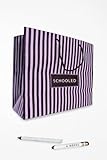
Schooled

Author: Anisha Lakhani
Reading Level: HS/Adults

SchooledI read this after hearing lots and reading quite a few reviews about the book, so I am not entirely sure about my reactions - how much was my enjoyment and annoyance colored by these preset expectations? And how much of my secret pleasure and overt disgust came from my having known the author and has been working in the school that this fiction is supposed to be based on? So read on, those of you who are curious to know my opinions about the book, with caution and many grains of salt!

First, I was surprised how the book does not really feature many recognizable students and faculty from the school, nor does it develop the school as a setting fully. In fact, most teachers do not even enter the story. It's as if this fictional K-12 school has but 50 students and they all go to the 7th grade and there are only half a dozen teachers who come into contact with the protagonist and the children. In short, the setting of the school is not quite fleshed out or rich, and the supporting characters are not 3-dimensional, either. A few incidents or coincidences are probably not identifiable by those who are not intimately connected to the school, either. So much, so much of the story is extremely exaggerated: the characters complete caricatures, and the whole world distorted with the kind of hyper-reality one can only find in Gossip Girls and Sex in the City. (Of course also in the highly manipulated Real Housewives "reality" shows...)

This brings me to say to those who seem to think that this is a truthful portrayal of the Manhattan Private Schools/Ivy League Feeders world, "You are absolutely wrong." This is fluffy fiction and no more than that.

I don't think there is even a need to defend my school since there is so little resemblance in SCHOOLED to the actual school -- including the physical descriptions and the ways teaching and learning are accomplished throughout the years. Suffice to say that I have encountered scores of most brilliant human beings: readers, writers, thinkers, activists, artists, mathematicians, scientists, all kinds of people -- both from its faculty pool and the student body, to feel privileged and proud to be part of this incredible institution.

The biggest weakness of the book, to my eyes, is how bland the writing is... with few exceptions where the lines are actually funny or effective, such as, "The world could be coming to an end and my mother would still find a way to offer a cookie with the gas mask." and "It was an all-purpose word, something of a Swiss Army knife capable of replacing all sorts of words, such as do, write, create, and especially finish." The rest of the book is filled with lines with little crafting or "polishing". Just a few examples here:

page 124: Anna wonders "if Shakespeare would be ... delighted that his work was the cause of such delight to a group of... seventh-graders."
page 126: "The last comment was like a wound in my heart."
page 131: "And I was an air traffic controller trying to control fifteen little planes all trying to land at one time."

To compound the problem of such thin prose is the poor editing. Missing punctuation marks, continuity errors, and misused words, such as "My ears were ringing. And when did faux mitzvah enter everyone's vocabulary accept mine?" ACCEPT? And this is supposedly written/narrated by an Ivy-Leaguer who studied English in college and teaches English to 7th graders.

The one saving grace is that the readers do not admire Anna (oh, maybe a little bit toward the end of the story when she suddenly has a courageous enlightment moment), and that adds some flavor to the tale of a small fry lost in the world of greasy glitz.

And chatting online with a High School student might shed more light on our views over this book:

Edited for clarity:

fairrosa: Yup... I guess... closer to truth. Nothing is TRUE in this book, though. And it's so hyper-reality that anyone thinks this has anything to do with reality is delusional themselves, I think.
student: You overestimate that, I think
fairrosa: overestimate how?
student: I think you overestimate how attuned the average reader is to Dalton
fairrosa: Definitely -- that's why I definitely need to write about how this is NOT the reality. But I did like the book enough... it's better than some other trashy novels, for sure.
student: Wha? O.o
fairrosa: All the flaws aside, Anna Taggert is a main character that does not put on a holier-than-thou air, nor is she pretending to be anything but a corrupted small fry lost in a glitzy world, even though in reality, I have yet to encounter any such real-life teacher.
fairrosa: That's my last paragraph...now.. do you think my analysis fair?? any other issues with the review?
student: Doesn't put on a holier-than-thou air? I really don't think you read this book XD
fairrosa: please let me know if I can post it as is?
student: It's an okay-written review, it's just wrong. It didn't bother you that characters spent the whole time hitting on her? That, somehow, nothing was ever actually her fault?
fairrosa: Hey.. .Anna Taggert is portrayed as a silly, money grabbing, totally lost person. There is nothing there to show that she is better than anyone else...
Everything is her choice -- she decided that she needed MONEY ... she failed to plan lessons -- she is stupid...The character is NOT portrayed as a GOOD person. Did you read the book?
fairrosa: One does not read the book and says to oneself that Anna Tagger is SUCH A GOOD person. Does one?
stuent: No, but she thinks she is!
fairrosa: But the READER knows that she is stupid, spoiled, greedy...etc. and the AUTHOR writes in that way...
fairrosa: she curses. she envies. she receives bribes. she cheats
student: Mmm, yes. But do you really think the point of the book is that she's bad, or that she was a good person placed in a bad system?
fairrosa: I think she was WEAK... maybe Bad/Good is not a great way to describe her or anyone else.
fairrosa: I think she did not really have moral fibers... of course, the world around her doesn't seem to have morals either...
student: She's portrayed as a nice girl corrupted by an evil world. Yes?
fairrosa: Nah... I don't think she's portrayed as a "nice girl" ever -- her motive of being a teacher is so that she would be LOVED by her students...So, I never got the sense that the protagonist is supposed to be a GOOD person.
student: Not that she would really teach or change students' lives.
student: That's absolutely false.
fairrosa: Did you find any of the book funny?
student: no.
fairrosa: Or are you just completely incensed?
fairrosa: Do you think it's because you're too close to it? Too protective of our school?
student: I think I might have been okay with it - or at least, not hated it - had it been marketed differently, had it not billed itself as that "look at what a 5-figure tuition really gets you"
fairrosa: Fair.


View all my reviews.

Labels: , ,

Friday, August 29, 2008

Take the CLAT Quiz!

The "Back to School" Horn Book Magazine is out. Monica Edinger and I have a piece in it. Maybe you'll enjoy trying your hand in answering questions we prepared?

Labels:

Friday, July 18, 2008

What's up with Normal?

In the past few years, I've noticed quite a few fiction titles for middle grade and middle school readers have the word NORMAL in their titles. Here's a list to help everyone keep them straight!

Back to Normal by Kate Klise (2008 - Scholastic)
Chasing Normal by Lisa Papademetrious (2008 - Hyperion)
Deliver Us From Normal by Kate Klise (2005 - Scholastic)
Far From Normal by Kate Klise (2006 - Scholastic)
The Last Exit to Normal by Michael Harmon (2008 - Knopf)
Looking for Normal by Betty Monthei (2005 - HarperCollins)
Not Exactly Normal by Devin Brown (2005 - Eerdmans)
Waiting for Normal by Leslie Connor (2008 - HarperCollins/Katherine Tegen)

And, of course there is the wonderful nonfiction, It's Perfectly Normal, and the YA Define Normal by Julie Anne Peters (2000 - Little Brown.)

I wonder if we collectively feel unsettled and abnormal and thus must find some way to either explain our abnormality or to rein

Labels:

Tuesday, July 15, 2008

Someone Save the Authors from Sloppy or Non-existent Copy-editing!!!

Although I am only talking about one book today, by way of an example, I am really ranting about a fairly wide-spread phenomenon in Children's Publishing of late -- that of a lack of careful copy-editing. Copy-editing is defined briefly as: to mark errors of spelling, grammar, punctuation and word usage to prepare the manuscript for final printing so each finished book is as error-free as possible. I am unsure whether there are still full-time copy-editing staff in most children's publishing houses these days (maybe someone can speak to this in a comment?) but from the number of errors one encounters in children's books these days, it seems that human copy-editing has become an obsolete art. If you have read a lot of recent children's books as I have done, you'll know what I'm talking about.

I just finished reading a very well-written and exciting story by Polly M. Robertus, entitled The Richest Doll in the World. It's a Holiday House 2008 publication. Judging from the font size and the length (129 pages,) I have no problem thinking of this book as for fairly beginning readers. Say, 2nd to 4th graders. It is even more inexcusable that the copy-editing is so sloppy! Here are a few page scans to illuminate my concerns. Before you read on and see for yourself whether this is a serious issue, I just want to say how sorry I feel for the author of this book. I can only imagine how much time, effort, hope, and heart went into writing, revising, and perfecting the telling of this entertaining and heartwarming story and yet, as a librarian, I cannot feel comfortable recommending this book to my young readers due to its poor copy-editing. I wonder if I am alone in feeling this way?

p. 18

You lust haven't tried hard enough...LUST?
I can just imagine how a 2nd grader reading this book asks her mom, "Mommy, what is LUST? I don't understand this sentence. What does 'lust haven't tried' mean?" Try explaining that one!

p. 26
Last time I checked (2 seconds ago,) the word "sidesh" has not made its way into the Merriam Webster Dictionary yet. (One would imagine that even a computer spell checking program would have picked up completely non-existing words and corrected the error. Did the production team not even bother with a once-over using a free program?)

These two are both from p. 34 -- and I was simply baffled by the abundance of commas...

Labels: , , , ,

Monday, July 14, 2008

Two Quotes

A quick and easy definition: Science Fiction has rivets; Fantasy has trees. – Orson Scott Card (from the audio commentary of Ender's Game, audiobook edition, 2002)

"They are not just coloring out of the lines. Their pens are not even on the paper any more!" -- paraphrased from Thom Filicia, designer and host of Dress My Nest, the Style Network


Labels: ,

Wednesday, July 09, 2008

Quote of the day

I'm listening to Toole's A Confederacy of Duncies and have many occasions to chuckle or even laugh out loud -- although the many comical situations are also profoundly sad. Here's a quote for the day to show Toole's genius in characterization without getting into tedious details:

Miss Trixie was never perfectly vertical; she and the floor always met at an angle of less than ninety degrees.

Labels: , , ,

Monday, July 07, 2008

Kung Fu Panda and Wuxia


Let me just come straight out and state that I really loved Kung Fu Panda, one of the summer's animated family movies set in a non-specific Chinese village, featuring all animal characters, ranging from Rhinos and leopards to pigs and praying mantis. Oh, and, a Giant Panda whose father, unfathomably, is a duck who is a chef and owns a noodle shop. I know that upon close examination, many people might find the story a bit superficial, and superficially mystical: about finding oneself and having faith in one's abilities and the whole "mystical" notion of fulfilling one's fate. It might be an outsiders' view of what Chinese martial arts world is all about but the creators of the movie did their homework and pay a lot of homage to the wuxia tradition.

Wuxia can be loosely translated to "martial arts knights" but the notion of WU is larger than just the practice of martial arts; it's a mind set and a way of life. So is the notion of XIA -- it often is not simply a person who has demonstrated talents in the arts of WU but also someone with great integrity and compassion, one who will help the less fortunate, and fulfill one's duty to the fullest. Wuxia Xiaoshuo (Wuxia Novels) has been a uniquely Chinese popular literary genre for the 20th and 21st centuries. A little more detailed explanation of general themes can be found on the wikipedia article on this topic.

One of the most fascinating elements, for me as a reader of wuxia xiaoshuo (I read wuxia most ardently during high school and college years) is the training processes of the protagonists. These tend to be unrealistically super-human -- one might learn to "walk on the top of grass" or to "defeat a dozen enemies barehanded and blind-folded," etc. That's why in my mind wuxia is closely resembling the western Fantasy novels. The creators of KFP definitely captured this aspect when Shifu (literally: Teacher/Master) figures out how to train Po and the audience is treated to a fantastic sequence of training sessions.

The movie is accompanied by a wonderful soundtrack and gorgeous background artwork. The calligraphy is not only beautiful but accurate. However, in most wuxia stories, you will find people using many different kinds of weapons: from swords to spears, with "hidden weapons" such as small needles (sometimes dipped in poison) and poisonous powders. Weaponry and the inventiveness of such are also what the readers/audience tend to appreciate in a work of wuxia. Maybe the sequel will feature more than just body-combat and using random objects (bricks and firecrackers, for example) to fight.

Labels: , ,

Saturday, July 05, 2008

Dystopia on My Mind

After reading Suzanne Collins' The Hunger Game, I've been mulling over the notion of a Dystopian novel. Have had some online and off-line discussions and realized that my definition of a Dystopian novel is very narrow but still want to hold on to that view because I believe that if it is too broadly applied, the power of the genre will cease to be as effective as it has been. Here's an IM chat transcript between me (F) and a former student who is now entering his senior year in high school (J). Slight edition was applied to the original format to make it more readable:

AIM IM with J.

J: Hey!
J: Happy 4th!
F: You too You too
F: So. Asking you a quesiton.
J: Yeah?
F: What do you think is a Dystopia?
J: ...Hmm. Well, WALL-E is dystopian.
F: how so?
J: It's a vision of the world where everything's gone to hell.
F: I have a very narrow definition of dystopia. That's too broad. That's just a BAD future
J: Alright. Well 1984 is dystopian. Yes?
F: Yes. Explain. Haha. This Is A Test!
J: Oh. So you subscribe to the theory that a dystopia must appear utopian.
F: I do.
J: I don't.
F: Then why bother using the term?
J: A dystopia is a world where everything is wrong. Look at the Greek roots.
F: I know.. but the word did not exist until 1868 according to OED
J: War of the Worlds is dystopian.
F: An imaginary place or condition in which everything is as bad as possible. That's the broad definition. I'm thinking of the literary tradition. The ‘dystopia’ or ‘inverted utopia’.I guess it can be so easily defined as a horrible future world (or current world.)
J: Yes.
F: Then, to me, the word to define a genre is almost pointless. 'cause anyone writing about the future with a bad government is writing a dystopian novel. Argh. ugh too.
J: Hmm. Well. You have a point, that it broadens the definition...
F: and ceases to be truly meaningful.
J: Although a bad government would never a dystopia make. Go see WALL-E and we can have a more intelligent conversation about this - seriously.
F: For me, the power of a dystopia novel is the presentation and conflict between what's SO GOOD on the surface with what's SO BAD underneath.
F: hahah. I will have to wait for Lily to get back to the city.
J: From the standpoint of a librarian, I see why you're right.
F: I promised not to see it until then.
J: From the standpoint of a student of Greek, I disagree with you.
F: Haha
J: Brave New World. Dystopian?
F: That's MEANT to be a Dystopian novel. So was 1984.
J: Fahrenheit 451?
F: But not sure about Blade Runner. I think 451 is. So is The Giver.
J: But Fahrenheit 451 isn't meant to be utopian. Giver - certainly. Well, Do Androids Dream is dystopian - haven't seen bladerunner.
F: That's why I said, "I think." 'cause I am not sure.
J: The Giver is a very archetypical dystopia. What about The Diamond Age?
F: Not Dystopian by a LONG SHOT. Neither are the Ender's series. The world is not perfect but nothing is so inverse. There has to be some form of "inversion"
J: I kind of thought the Chinese world in Xenocide was dystopian?
F: That's that particular world, maybe, but the entire series is definitely not concerning itself singularly that way.
J: I agree.
F: Matrix is not dystopian.
J: Oh? Why not?
F: Even though it does portray a world that is under such control.
F: I dont know.
J: btw, this question is awesome.
F: Why don't I think so?
F: HAHAH
F: Matrix -- 'cause I guess in some way the people who made the movie did not really have much to say about our society
F: As a literary genre, it serves a fairly specific function. Here's an example: Lord of the Flies. It's a little society that is as BAD as it can be.
J: LotF isn't a dystopia.
F: That's THE example. How it is not.
J: Well, I've stolen your view.
F: If by your original definition...
J: No, I've switched, irritatingly!
F: Haha
F: YEAH. I WON.
F: Ok.
F: I'm saving this convo for my blog.
J: Well, it's poorly-conceived Greek by your definition.
J: But I concede that, from a literary standpoint, your definition makes more sense.
F: HAHAH. thank you. very much.
J: Have you read The Plot Against America?
F: Now I can go to bed and sleep well and be told by someone else tomorrow that my definition makes NO SENSE.
J: Phillip Roth?
F: Nope.
J: Alright. lol, who's going to tell you that?
F: is that one?
F: Don't know yet.
F: I've been asking everyone I meet.
F: run into.
J: I think it's my lone example of a non-futuristic dystopia.
F: talk to.
F: cool.
F: For some reason, in my mind, there has to be some form of superficial utopian view by the masses to set up the stage for a dystopian novel to work. Or at least, to be effective or powerful. Without the contrast, it does not really function well.
J: If you want to interpret it that way, it's a perfectly legitimate view. So you would think the second half of WALL-E is dystopian, not the first half! ^_^
F: I just read a book for kids (or teens) where you see everything of a BAD society from the view point of a girl who ALWAYS thought of the society as bad and MANY others feel the same way 'cause they are on the BOTTOM of the society. And I simply couldn't peg this book as a dystopia 'cause there is no disillusion.
F: k. I look forward to the movie.
J: Snow Crash is a dystopia. Even if Diamond Age isn't.
F: Say if Brave New World is viewed through not an Alpha's pov but someone really low on the spectrum....
F: Nah.. Snow Crash is set in a future that is both good and bad and people have no illusion about what their society is about. It's a Cyper Punk
J: I disagree with that interpretation.
F: Already a sub-genre.
J: Cyber Punk can be dystopian!
F: I know *haha* Just want to yank your chains.
J: What's-it-called! The book by Gibson! Such a dystopia!
F: Neuromancer?
J: Yeah!
F: Hm... disagree. It's just very bleak world, like Blade Runner.
F: Bleak /= Dystopian
J: So you would think it's dystopian only from a Tessier-Ashpool point of view. Fantastic wealth, technological advances, theoretical happiness, but bleak = dystopian.
F: I'm thinking maybe one can define the WORLD as a dystopia some times without the book as dystopian. ?
J: Or parts of it, even...
F: I do think it depends also partially on how the author treats that world. The focus. Dystopian stories tend to be cautionary tales.
J: Parts of LotR are almost dystopian.
F: Nah. It's FANTASY.
F: hahahahaha
J: Fantasy can be dystopian, silly!
F: Disagree re LotR.
J: Minas Tirith is totally dystopian.
F: If that is then Narnia is, too
F: Not at all.
J: The greatest city in the world, where everything's perfect, rotting at its core?
F: Minas Tirith is just falling from grace, with one bad guardian.
J: A dystopia is a facade of perfection, yes?
F: That's just faded glory.
J: Under which lies great misery?
F: You're picking a small part of a grand picture to argue.
F: In MANY novels, you'll find such settings to help move the plot along or to create conflict.
J: yes. I agree. And Narnia isn't dystopia, just apocalyptic...
F: So, against the grand backdrop of LotR which is NOT a dystopian novel ...
J: Do you mean to tell me you can't have a utopian society in a non-utopian novel?
F: That's important to distinguish and I agree with your assessment that Narnia isn't dystopia (which was my point in the first place)
J: Lorien is a utopia. Yes?
F: Utopian is not a genre. We really don't have a body of literary work that we can say, "Hey, look, a list of Utopian Novels."
J: Sure we do. It's just one book, and it's by Sir Thomas More.
J: ^_^
F: That's why I don't believe that simply defining the word DYSTOPIA is sufficient in thinking about the literary device/genre.
F: it's not a BODY/LIST of books
F: You stand corrected!
J: Eh, fair point.
F: 'k. thanks. it's been fun.


Labels: ,

William Sleator's books


It was telling when Orson Scott Card, upon finding that I had read many of his books and not just the Ender series, got so excited and asked, "So, you must like William Sleator's books a lot?" and proceeded to gush over Sleator's work, specifically Singularity. I acted a bit dense and tried to high-five Card who told me that he's not the "high-five kind." ooops! But, our brief conversation reminded me how much I DID enjoy all the books I read by Sleator, and how much I appreciate that he not only creates gripping plot and probing philosophical and moral dilemmas, he also really gets in science right (at least according to the theories of the time when the books were written.) My favorite titles by him are Singularity, for its illuminating explanation of black hole and singularity and for its protagonist's emotional and moral struggle after he realizes that he can age himself and turn the table on his superior and sometimes bullying brother; The Boy Who Reversed Himself, for its vivid depictions of different dimensional worlds and the protagonists' grappling with adolescence and romance; The Green Future of Tyco, for its dizzying time-hopping scenes and Tyco's realization of how a person's past shapes his future and how one can become careless with one's actions and turn out to be quite despicable; The House of Stairs for its chilling social experiment and exposure of the darker sides (and some brighter sides) of human nature; Among the Dolls, for its creepy depiction of neglected dolls and their revenge upon the careless girl. And I can't talk about Sleator's works without mentioning how much fun my students and I have had for years now when we shared the jokes (gross, quite often) and humorous events (highly exaggerated, quite often) in Oddballs -- short stories based on his family stories.

Labels: , , ,

Wednesday, July 02, 2008

2008 Anaheim ALA Highlights in Pictures

I'm back home in warm and breezy New York City. It's beautiful here by the Hudson. The sun just set. And we saw many beautiful white sails on the river in the dimming sunlight.... Now it's time to upload some pictures from the ALA Annual Conference. I never remembered to bring a camera but this time, I did and boy did I go a bit crazy! I should have taken some pictures of the Notable Children's Books Committee but I got too nervous and too focused on "work" and never thought of capturing those moments which were super important. These pictures here preserved the moments that I relaxed and had fun with friends -- old and new.

But before the people pictures... see the carpet in the Ballroom of the Disneyland Hotel.... can you "Spy Mickey"?


Yes. Monica and I (and Nina) went to Disnleyland!


Peter Sis


Orson Scott Card


Nina Lindsay, Me, Candace Fleming, Eric Rohmann, Richie Partington at the Lucky Strike Bowling Lane (Orange Block)


Andrew Clements


Reunion with the 2002 Newbery Committee
(Kathy Odean, Ken Setterington, Louise Sherman, Jeri Kladder,
Patty Carleton, Me, Vaunda Nelson, Vicky Smith)


Lisa Falk, Vicky Smith, Elizabeth Overmeyer, and Kathy Odean


I also saw Joanne dinner and "glanced" and said hi to Deb. Junko is in Germany and Gail and Shron were not at the Conference.

THE CALDECOTT/NEWBERY BANQUET, JUNE 29th, 2008.

Yup, it's me with the 2008 Caldecott Medal winner Brian Selznick. Our footwear matched!


2008 Newbery Winner Laura Amy Schlitz with Nina Linday, Newbery Chair.


2002 Newbery winner Linda Sue Park with me.


Me, Kathy, and Louise pre-banquet


Jonathan Hunt, friend, librarian, reviewer, and 2008 Printz Committee member Monica Edinger, friend, teacher, author, blogger of children's literature, and 2008 Newbery Committee member. At the banquet.


Me with Hope Anita Smith, poet, author of The Way A Door Closes and Keeping the Night Watch.


Labels: , , , ,

Tuesday, July 01, 2008

In the Land of The Mouse

Writing this from The Anaheim Hilton. On a warm evening in Southern California. This is a strange land and I still feel a total stranger. The reason for me to be here? The many exciting things happening at the American Library Association's Annual Conference. Among these exciting things:

The 2009 Children's Notable Books Committee has met for the past three days, discussing the merits and concerns of 59 books for children from the Spring 2008 offering. I am so pleased to be on this committee, with ten other thoughtful readers and critics who really understand books and especially books for children. Here is the list of the books in excel form that we discussed from the ALSC Web Site.

The interesting and often illuminating conversations: with authors, illustrators, editors, critics and other librarians: Candace Fleming, Orson Scott Card, John Green, Peter Sis, Eric Rohmann, Linda Sue Park, Dinah Stevenson, Laura Godwin, Brenda Bowen, Anne Scwartz, Vicky Smith, Nina Lindsay, Monica Edinger, Jonathan Hunt, Elise DeGuiseppi, Martha Walke, Eliza Dresang, and many many others.

Of course, there was the Newbery/Caldecott Banquet to celebrate this year's award winners and honorees. Anyone who attended this year's Banquet would probably agree with me that the two speeches were magical, all done without the help of Mouse Ears or a Fairy's Wand. Here's a detailed blog entry by Wendie Old about the evening. Thanks to Tim Jones, Marketing Director at Henry Holt, I was seated with the coolest people in children's publishing: poets Nikki Giovanni and Anita Hope Smith, author/illustrator Laurie Keller, author Mary E. Pearson, publisher and author Laura Godwin, and editor Christy Ottaviano (who now has her own imprint!)

Some other personal highlights:

  • I want to publicly congratulate on a job so brilliantly done by Karen Breen and Nina Lindsay, chairs of Caldecott and Newbery Committees in their introduction of each title. It was a pleasure to listen to their descriptions of the books. And both of them looked so beautiful on stage, too!
  • Brian's "starry shirt" and silver boots were "the talk of the banquet hall!" I had the chance to capture both in pictures.
  • It was wonderful to hear Eeyore's Books for Children mentioned by Brian. He worked there. I did, as well: Brian on the West Side store and I on the East Side. (And he wasn't exaggerating when describing the somewhat demanding and difficult patron, either.)

Labels:

Monday, May 26, 2008

All I do is not reading...

This entry is sparked by Neil Gaiman's blog entry of today -- someone asking about becoming an editor because she loves to read and being an editor, in her mind, will be all about reading. Gaiman posted a really good response from a TOR editor, and it boils down to the fact that, no, an editor's job is not reading all day.

Same thing that I often experience when people talk about wanting to become a Librarian because they love books and reading and in their mind, Librarians seem to be doing nothing but reading. The truth is, at least in my case, I almost NEVER read on the job. I read on the way to and from work on the subway, I read at night, I read brushing my teeth in the morning, I read on the weekends, I read in bed, and I read on vacation. But, if I can steal 10 minutes in any given day to read a chapter or so, I'll count myself lucky! There is a lot of data management, program preparation, PR, reference assistance, readers' advisory, reading list compilation, finding resources for patrons and for the web pages... all those little "tasks" that take up all the time in an 8-hour day that a passionate reader will definitely find frustrating if he or she got into this profession thinking that they wouldn't need to do much else. (HA! Think again!)

I am fortunate that I love to read AND love to do all the other things that come with the job (umm... maybe not that much chasing down overdue books, cleaning my desk, or shelving...) and I'd recommend anyone who wants to be a librarian thinks about this job as a service profession, as a PR profession, and as an Information Management profession, on top of a Reading Profession.

Labels:

Tuesday, April 29, 2008

Webkinz as Stories

This is what was told me by my 9-year-old daughter who is an avid Webkinz player. Rumor #1: If you complete the Legendary Crown of Wonder and you put it on your Webkinz pet. The pet will die. Rumor #2: Ms. Birdie (who runs the Adoption Center) will steal your Webkin or she will stab your webkin. Rumor #3: Dr. Quack (the Vet) has a gun and shoots your pet behind the curtain when you take it for a check-up.

Webkinz is an online game site which is designed to be gentle and all the games (even the shoot-them ones) are revised so no one is ever killed and the violence level is probably 5 on a scale of 0 to 100.

And yet, young children obviously create and relish their own darker and more frightening stories. I found this deeply interesting and illuminating.

Labels: ,

Monday, April 21, 2008

Balancing Act

I have been thinking ... not only authors have to balance the plot, the tone, the characters, the excitement and the poetic moments, a reader, especially a critical one that has some responsibilities to other readers (such as a teacher or a librarian,) has to perform such acts constantly when recommending and sharing books. I really love Wilson's 100 Cupboards and yet I can totally see some flaws. Do I have to preface my recommendation by "although there are parts of the book that might not seem convincing..." before getting into all the exciting stuff that I believe most children would love? Or, do I just enthusiastically "push" the book like I did today to a bunch of 6th graders without mentioning my own reservations because they might not find those parts as annoying as I did? Shouldn't I somehow be honing their literary critical thinking abilities? If there is a major flaw, shouldn't I point out and "enlighten" these young readers? This dilemma applies to the opposite situations as well -- when I "know" that a book is very well written and painstakingly crafted, but I am not personally responding to it or moved by it, do I then not advocate for it? Or, shouldn't I muster some pretend enthusiasm in hope that maybe some young readers will appreciate the story, the character, the subject matter, etc., even if I have not? I don't do this very well... not well at all.

Labels:

Monday, April 14, 2008

Roasted Chickens

It's funny how I often associate my reading experiences with my food experiences. This is yet another one. I am reading a new fantasy novel and it is so taste-less that I have to keep skipping pages and getting more and more annoyed by the book (and by the author, I guess.) It is like eating a badly roasted chicken. Although the cook rubbed the chicken with all sorts of herbs and roasted until the outside is golden brown, for some reason the meat is neither juicy nor flavorful. The temperature might have been wrong. The herbs might have been too old. The chicken itself might just been bland to start with. Anyway, the meat simply is woody and tastes like paper. The author of this book dressed up the story with all sorts of "ingredients": magical creatures popping up every two pages, dangers lurking at each corner, young people taking charge of matters, and lots of references to historical facts. But, at the core of the tale, there is nothing for me to savor. The sentences are plain, the pacing is laborious, the details are tedious, and the characters are neither vivid nor admirable. In short, I can't swallow this impressive looking bird!

Labels: